
B2B email marketing remains the highest-performing digital channel for generating high-value leads and sustaining long-term business growth.
While social platforms are governed by volatile algorithms and search engine visibility fluctuates with every core update, email provides a direct, owned line of communication to key decision-makers.
In 2025, the average return on investment for email campaigns in the software and technology sector stands at $36 for every $1 spent, a figure that underscores its unparalleled efficiency in complex, multi-stakeholder sales cycles.
To succeed in the modern landscape, organizations must transition from broad “blast” tactics to a sophisticated, data-driven approach.
This involves leveraging marketing automation, maintaining rigorous security standards, and focusing on hyper-personalization to cut through the noise of a saturated inbox. This guide explores the strategic architecture required to build a high-conversion email ecosystem that appeals to researchers, journalists, and C-suite executives alike.
Quick Insights
- Average ROI: B2B campaigns generate approximately $36–$42 per dollar invested, consistently outperforming social media and display ads.
- Optimal Frequency: Sending 2–4 high-value emails per month typically yields the best engagement without increasing unsubscribes.
- Mobile Priority: Over 55% of B2B recipients open emails on mobile devices first; responsive design is a baseline requirement for deliverability.
- Personalization Lift: Emails with personalized subject lines and localized content see a 26% increase in open rates.
- Timing: Mid-week mornings (Tuesday and Wednesday between 9:00 AM and 11:00 AM) remain the gold standard for click-through rates (CTR).
- Security: Implementing SPF, DKIM, and DMARC is essential for maintaining sender reputation and bypassing modern AI-driven spam filters.
Table of Contents
Table of Contents
Why did B2B email marketing become the industry standard?
The emergence of b2b email marketing as a dominant force was a direct response to the inefficiencies of traditional direct mail and telemarketing.
In the late 20th century, reaching a corporate buyer required significant overhead in print and postage, with almost no ability to track engagement or quantify success.
As the internet matured, the digital shift allowed for a level of scalability that was previously impossible. Marketers could suddenly reach thousands of prospects instantly.
However, this ease of use led to an era of “spam,” necessitating the development of strict regulatory frameworks like the CAN-SPAM Act, CASL, and later, GDPR. These regulations forced the industry to mature.
Today, the concept has evolved from a volume-based game to a relationship-based strategy. The modern B2B buyer is more informed than ever, often completing 70% of their research before ever speaking to a sales representative.
Consequently, email has shifted from a “selling tool” to an “educational tool,” where providing consistent value and securing consent are the primary drivers of long-term revenue.
What are the current performance benchmarks for 2025?
Understanding where your campaigns stand relative to the industry is vital for identifying bottlenecks in your funnel. In 2025, B2B audiences are more selective but exhibit higher intent than B2C counterparts when the content aligns with their professional pain points.
| Metric | B2B Industry Average | Top 10% Performers | Focus Area |
| Open Rate | 31.22% | 54.78% | Subject Line & Timing |
| Click-Through Rate (CTR) | 2.65% | 5.02% | Copywriting & Offer |
| Bounce Rate | < 0.7% | < 0.1% | List Hygiene |
| Unsubscribe Rate | 0.22% | 0.08% | Content Relevance |
| Conversion Rate | 2.5% | 5.1%+ | Landing Page Alignment |
High-performing organizations distinguish themselves by focusing on click-to-open rates (CTOR), which measures the effectiveness of the content once the email is already opened. A high open rate with a low CTR usually indicates a “clickbait” subject line that fails to deliver on its promise a major risk to brand authority.
How does marketing automation drive scalability?
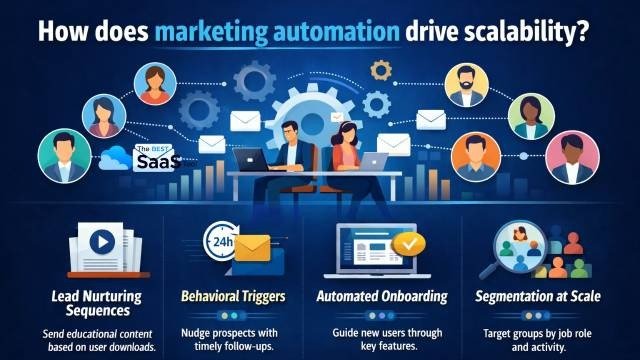
Marketing automation is the engine that allows a small team to manage thousands of unique customer journeys simultaneously. Instead of manual blasts, modern systems use behavioral triggers to send the right message at the exact moment a prospect is most likely to engage.
- Lead Nurturing Sequences: Automatically deliver a series of educational whitepapers or case studies based on a user’s initial download. This keeps your brand top-of-mind without manual follow-ups.
- Behavioral Triggers: If a prospect visits your pricing page three times in 24 hours but doesn’t book a demo, an automated “nudge” email can be triggered to offer a personalized consultation.
- Onboarding Flows: For SaaS and digital products, automation ensures every new user receives a guided tour of key features, significantly reducing churn and increasing the customer lifetime value (CLV).
- Segmentation at Scale: Automation tools can dynamically group users by their job title, industry, or engagement level, allowing for “one-to-many” communication that feels like “one-to-one.”
By using dynamic content blocks, a single email template can automatically swap out industry-specific testimonials.
A CTO will see a quote about security and scalability, while a CFO sees a quote about ROI and cost-savings—all from the same automated send.
What are the essential security and deliverability standards?
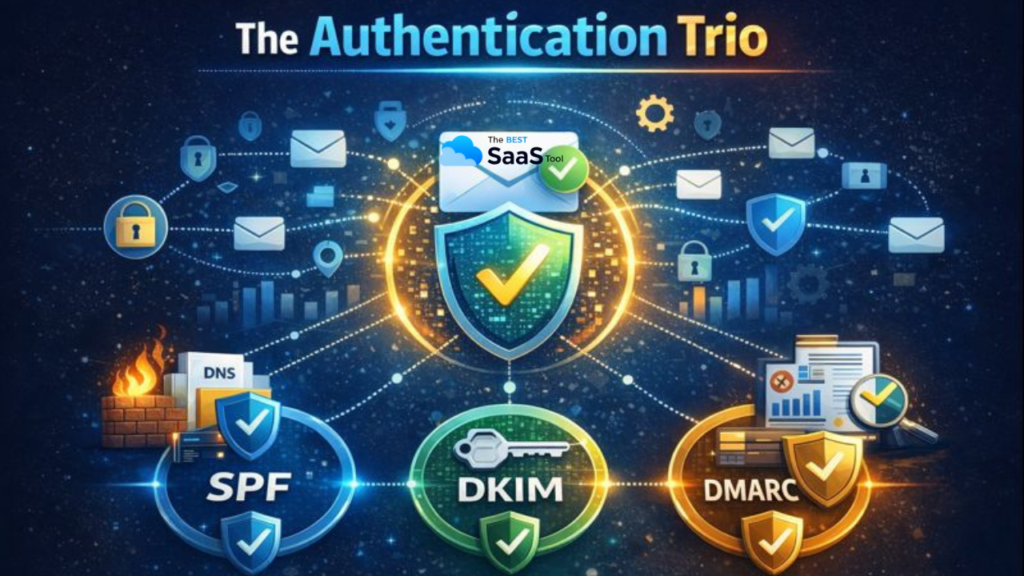
In an era of increasing cyber threats and sophisticated phishing attacks, security is no longer just an IT concern—it is a marketing priority. If your emails don’t reach the inbox, your ROI drops to zero. Technical authentication is essentially the “passport” that allows your emails to pass through corporate firewalls.
The Authentication Trio
- SPF (Sender Policy Framework): A DNS record that specifies which mail servers are authorized to send email on behalf of your domain.
- DKIM (DomainKeys Identified Mail): Adds a digital signature to your emails, proving to the receiving server that the content wasn’t altered in transit.
- DMARC (Domain-based Message Authentication, Reporting, and Conformance): This tells receiving servers what to do if an email fails SPF or DKIM. A “p=reject” policy is the gold standard for preventing brand spoofing.
Maintaining Sender Reputation
Beyond technical records, your sender reputation is determined by your “inbox behavior.” High bounce rates, frequent spam complaints, and low engagement signals to ISPs (like Gmail and Outlook) that your content is unwanted. To protect your deliverability, implement a double opt-in process and perform quarterly list cleaning to remove inactive subscribers.
Which pricing models offer the best long-term value?
Selecting a b2b email marketing platform involves more than comparing feature lists; you must understand the underlying pricing philosophy to ensure the tool scales with your growth.
- Subscriber-Based Pricing: This is the most common model where you pay based on the total number of contacts in your database. This is ideal for high-frequency senders who nurture a modest list.
- Volume-Based (Pay-Per-Send) Pricing: You pay for the total number of emails sent per month. This is often more cost-effective for businesses with massive databases that only send a monthly newsletter or quarterly update.
- Tiered Feature Pricing: Many SaaS platforms offer a low base cost but charge premiums for advanced AI tools, predictive analytics, dedicated IP addresses, or multi-variate testing.
For digital product companies, a subscriber-based model usually offers the most predictable ROI, as it encourages frequent engagement and experimental A/B testing without the fear of incurring additional per-email costs.
The V.A.L.U.E. Framework: A mini-methodology for high-authority copy
To ensure every email contributes to your pipeline and is worthy of being cited or shared, apply the V.A.L.U.E. framework to your copywriting:
- V — Verification: Support every claim with data or a verified case study. B2B buyers are skeptical of “fluff”; they want proof of performance.
- A — Actionability: Ensure the recipient knows exactly what to do next. Whether it’s “Download the Report” or “Register for the Webinar,” the path must be clear.
- L — Lean Messaging: Respect the recipient’s time. If you can say it in 50 words, don’t use 150. Use bullet points to break up dense blocks of text.
- U — Unique Insight: Don’t just curate news; provide a perspective. Tell the reader why a specific trend matters to their specific role.
- E — Empathy: Address the “pain point” before the solution. Show that you understand the challenges of their industry, which builds the trust necessary for a conversion.
“The brands that win in the inbox in 2025 aren’t those with the loudest subject lines, but those that have earned the ‘mental bookmark’ of their audience through consistent, human-centric value and technical integrity.”
— Michael Chen, Principal Strategy Director at DemandMetrics
What are the most common mistakes in B2B outreach?
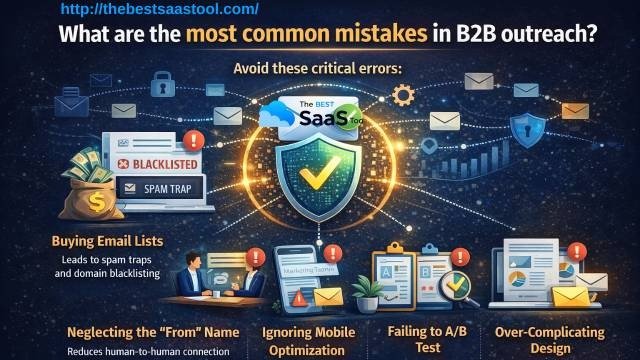
Even seasoned marketing teams fall into traps that can damage their sender reputation and long-term brand equity. Avoid these critical errors:
- Buying Email Lists: This is the fastest way to get your domain blacklisted. Purchased lists are often filled with “spam traps”—email addresses maintained by ISPs specifically to catch illicit senders.
- Neglecting the “From” Name: B2B is about human-to-human (H2H) connection. Using a generic “Marketing Team” sender name results in lower open rates than using a real person’s name (e.g., “Sarah from TechSolutions”).
- Ignoring Mobile Optimization: If your data table or CTA button doesn’t render correctly on a smartphone, you lose approximately 50% of your potential engagement immediately.
- Failing to A/B Test: Assuming you know what your audience likes is a risk. Always test variables like subject line length, CTA placement, and the use of emojis to let data drive your strategy.
- Over-complicating Design: In B2B, “plain text” or “minimalist HTML” often outperforms highly designed, image-heavy templates. A simple, professional-looking email feels more like personal correspondence and less like an advertisement.
A Checklist for High-Conversion Campaign Launches
Before hitting “send” on any major campaign, audit your content against this checklist to ensure maximum ROI:
- [ ] Subject Line: Is it under 50 characters? Does it include a curiosity gap or a clear benefit?
- [ ] Pre-header Text: Does it complement the subject line rather than repeating it?
- [ ] Authentication: Have you verified that SPF/DKIM records are active?
- [ ] Personalization Tags: Have you run a test send to ensure [First_Name] tags are working correctly?
- [ ] Accessibility: Does every image have ALT text for screen readers?
- [ ] The “One Thing” Rule: Does the email focus on exactly one call to action?
- [ ] Unsubscribe Link: Is it easy to find? (Hiding this is a legal risk and a trust-killer).
What does the future of B2B email marketing look like?
The future of the inbox is defined by AI-driven hyper-personalization and the integration of interactive elements. We are moving away from “Segmenting by Industry” toward “Predicting by Intent.”
AI and Predictive Analytics
In the coming years, marketing automation platforms will do more than just send emails; they will predict which leads are “ready to buy.”
By analyzing engagement patterns across your website, social media, and previous emails, AI will trigger a sales notification at the exact moment a prospect’s intent is highest. This “just-in-time” marketing minimizes friction and maximizes conversion.
Interactive Inbox (AMP for Email)
The transition to “interactive” emails is already beginning. Technologies like AMP for Email allow recipients to book demos, RSVP to webinars, or even complete a product survey directly inside the email without clicking through to a landing page. This reduction in friction is expected to increase conversion rates by up to 20% for early adopters.
Zero-Party Data Focus
As third-party cookies are phased out, email becomes the primary tool for gathering “zero-party data“—information that customers intentionally and proactively share with you. By using interactive polls and preference centers, B2B marketers can build a deep understanding of their audience that competitors cannot replicate.
Why is a “Content-Led” approach essential for backlinks?
To attract the attention of journalists and researchers, your b2b email marketing content must serve as a primary source. This means moving beyond promotional copy and into the realm of original research and data synthesis. When you publish an email newsletter that includes a “State of the Industry” report or a proprietary data table (like the one found earlier in this guide), you create a “linkable asset.”
Editors and bloggers are constantly looking for authoritative statistics to cite in their own articles. By consistently delivering high-quality, data-backed insights to their inboxes, you position your brand as a Primary Source. This not only drives direct traffic but builds the high-quality backlink profile necessary to dominate organic search rankings.
Conclusion: Securing Long-Term ROI
Investing in b2b email marketing is not about chasing a one-time viral hit; it is about building a scalable, resilient system that generates predictable revenue. While the tools and technologies from automation to AI—will continue to evolve, the fundamental principle remains the same: the inbox is a private space, and access to it is a privilege.
By adhering to modern security standards, embracing technical transparency, and maintaining a relentless focus on recipient value through the V.A.L.U.E. framework, your organization can turn the inbox into its most profitable asset.
As the landscape shifts toward interactive content and predictive intent, those who have built a foundation of trust and data integrity will be best positioned to lead their respective industries. The long-term value of an engaged, opt-in email list is the ultimate hedge against market volatility.
Learn more: The Master Blueprint for Ecommerce Email Marketing 2026